Best Practice for the Analytical Laboratory - Ongoing Stability Testing
Print
Short, focused, linked courses on topics of special interest to analytical laboratories of manufacturers of pharmaceutical active ingredients and products - Why not attend two or all three of them to get a very special discounted rate
Thursday 17 May 2025
Manchester Marriott Victoria & Albert Hotel, Manchester, UK
£715.00 excl. VAT – £858.00 incl. VAT (first booking)
£572.00 excl. VAT – £686.00 incl. VAT (additional bookings from same site)
Type: Pharmaceutical
About this course
In June 2006 the EU implemented a change to Chapter 6 of the EU GMP Guide to add the requirement that the stability of marketed products be monitored according to a continuous programme that will detect any stability issues.
ICH Q7 GMP for APIs also requires that “at least one batch per year of API manufactured should be added to the stability monitoring programme and tested annually to confirm stability”.
This course is designed to help you understand and meet the EU GMP expectations in an effective and efficient manner that will add value to your business.
You will receive detailed guidance on what is required for a compliant ongoing stability programme and how to analyse the data that is produced.
What You Will Learn
- The requirements of EU GMP Guide Part I, Chapter 6 and Part II (ICH Q7)
- How to analyse stability data on an ongoing basis, tracking trends
- How to put together an effective ongoing stability programme and how to make the process efficient by bracketing pack sizes, product strengths, etc.
- How to handle the issues that arise in ongoing stability, such as missed time points, storage temperature excursions and OOS or OOT results
Course outline
Ongoing Stability Testing
- What is it and why is it important?
- Legal requirements; EU GMP Guide Chapter 6 and Part II (ICH Q7)
- What are the key elements of an ongoing stability programme?
Data analysis techniques for predicting stability and identifying OOT results, based on ICH Q1 guideline
The design of an efficient stability programme
- Bracketing and matrixing
- The cluster method
How to handle issues that arise with stability testing
- Sample management
- Qualification of stability chambers
- Missed time points
- Storage temperature excursions
- Investigating OOS/OOT results
The course will begin at 09.00 and finish at 16.00
Best Practice for the Analytical Laboratory
The integrity of analytical laboratory data relies on the knowledge, understanding and training of all the people involved
Over the past 25 years NSF-DBA has built a strong reputation for providing high quality training on numerous aspects of Good Manufacturing Practice. We are pleased to be able to offer you a suite of three linked courses covering current best quality practices for chemical analytical laboratories.
- Analytical Methods: Documentation, Validation and Transfer
- Investigating Out of Specification Results
- Ongoing Stability Testing
This suite of courses is designed to cover a range of inter-related topics covering best quality practices within chemical analytical laboratories.
These courses are designed to provide you with our ‘trademark’ practical advice on what to do to achieve cost-effective quality assurance whilst satisfying current regulatory authority expectations.
Those of you who are new or less experienced will benefit from the whole suite. We will provide you with the knowledge and practical interpretation you need to perform your duties.
Those of you with greater experience or who are changing roles may wish to focus your participation so we enable you to select which modules to attend.
Each of the related courses will explore the detailed aspects of the topics that cause you concern and we are available at all times to answer your specific questions. Attendance will enable you to network with other delegates and benchmark your laboratory’s performance.
Venue
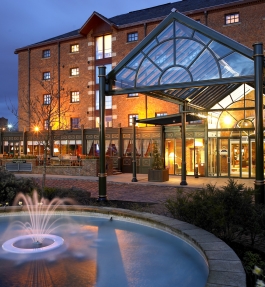
Manchester Marriott Victoria & Albert Hotel, Manchester, UK
The Manchester Marriott Victoria & Albert Hotel stands on the banks
of the River Irwell, near the city centre but convenient for Manchester
Airport (19km), the city’s Piccadilly rail station (3km) and the UK’s motorway networks.
Recently lovingly restored, this Grade II listed building bears many modern features. The hotel has its own car park and the Living Well Health Club with pool, gymnasium, sauna and steam room is just a few
minutes from the hotel.
Also nearby are the Imperial War Museum North West, Lowry Museum and Manchester’s three theatres. A few minutes’ walk takes you to the city’s main shopping and eating district.
Hotel Accommodation
- We have a block booking of bedrooms at the Manchester
Marriott Victoria & Albert, at a specially negotiated bed and breakfast rate per delegate per night.
- As part of our improvements to the booking process, we have arranged for an online booking service with the hotel and details of how to make your accommodation booking will be included in your course joining instructions
(issued to you at the time of booking). Alternatively you will be able to make a telephone booking directly with the hotel.
If you need any help or guidance with the accommodation booking process, please contact our course administration team.
- Your account with the hotel should be settled at check out.
- Any charges made by the hotel as a result of you not taking up your reservation for any reason will remain
your responsibility, therefore please ensure you are aware of the hotel’s cancellation policy.
Tutors
We believe that our team of experts are the best available. Not only have they got years of experience in the industry, but they are committed to tutoring and helping those inside the industry to improve and raise the standards. We understand that you attend courses to learn about the latest regulations and to get your questions answered.
Our experts for this course are:
Chris Burgess
Dr Burgess also has 35 years’ experience in the pharmaceutical industry primarily with Glaxo in Quality Control, Quality Assurance and Analytical R&D. Dr Burgess has published over 70 papers and books in analytical science. He is a member the PDA (USA) Scientific Advisory Board on OOS Task Force and presented at the PDA/FDA meeting of the new OOS Guidance in December 2006 in Washington DC.
What you've said
“Would have liked even more statistics!”
Sarah McConnell, Ipsen Biopharm, UK
“Well set out, very informative, good feedback with lecturers.”
Andrew Rimmer, Mölnlycke Health Care, UK

 An NSF International Company