About this course
Come and listen to the best in the industry explain and outline the challenges, solutions and considerations impacting medical device design and manufacturing organisations in light of recent high profile material safety concerns.
Over the last five years there has been a deepening concern that the method of understanding the safety of medical devices when considering biological risks has not encouraged the use of the most up-to-date scientific, engineering and regulatory methods. Several high profile failures relating to surgical implants have raised the level of concern from the US FDA, European Commission and subsequently the authorities responsible for overseeing medical device safety around the world.
Standards-setting groups have worked hard to bring standards into line with the latest considerations for risk management, testing, analytical methods and ongoing control of materials and devices, and there have been significant changes in how the assessment of clinical benefit over risk should be undertaken by manufacturers. This has culminated in the need for better risk management, better knowledge of the actual failure modes that can have an impact on biological stability when interacting with the human body, and a better understanding of the tools and techniques to be used when validating the design, process and clinical efficacy of a medical device throughout its lifecycle.
Who Should Attend
People involved in:
- Design
- Testing
- Auditing
- Quality Assurance
- Clinical or regulatory activities supporting the above
- Wound care
- Drug delivery
- Surgical implants and novel implantable devices
Course outline
Study Day Outline
Overview of Toxicology for Medical Devices – risks and issues surrounding the medical device industry relating to biological evaluation and material safety:
- Phthalates and plasticisers
- Extractables and leachables
- Metal ion and ceramic debris formation
- Manufacturing process residues
- Understanding long-term device safety
- Changes in biological evaluation
- Understanding characterisation
Programme Outline
08:30 Registration
09:00 Medical device biological safety – recent cases and lessons learned – John Lang
09:30 Principles of medical device safety – an introduction to medical device toxicology and biocompatibility – John Lang/Albrecht Poth/Adrian Keene
10:15 Break
10:30 Planning for material safety and biocompatibility through your risk management and design validation – James Pink/James Scull
11:15 Biological evaluation – step by step – John Lang/James Pink/James Scull
12:00 Regulatory Agency review of biological evaluation and medical device safety – Sam Boyer/Adrian Keene
12:30 Lunch
13:15 Cost-effective and design efficient testing strategies (getting the biggest bang for your buck) – John Lang/James Scull/James Pink/Albrecht Poth
13:45 Utilising analytical methods for your devices – E&L case study – James Scull/ Albrecht Poth
14:30 What we can learn and build into our processes from recent cases such as PIP, MoM and other high profile cases – John Lang
15:15 Questions and answers to the panel
16:00 Close of day
Venue
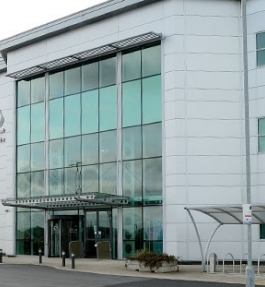
AMP Technology Centre, Sheffield, UK
We have selected the Advanced Manufacturing Park (AMP) Technology Centre near Sheffield as its location and environment are ideal to centralise and control our services. Based in a region well known for its expertise in healthcare manufacturing technologies and supported by clinical and academic excellence, the Centre provides an ideal location for business events, meetings, seminars, training events and small scale trade shows. With free parking, proximity to the M1 and M18, and within an hour’s drive of Leeds, Manchester, Sheffield, Bradford, Nottingham and Leicester, it is a convenient and accessible location.
The AMP has been designed to accommodate a range of manufacturing related activities, from the work of fledgling engineering and technology companies to the University of Sheffield’s collaboration with some of the world’s foremost advanced manufacturing technology businesses, such as Boeing and Rolls Royce.
Hotel Accommodation
We have a block booking of bedrooms at both the Aston Hotel Sheffield and the Holiday Inn Rotherham-Sheffield at a specially negotiated bed and breakfast rate.
Hotel reservations should be made directly with the hotel. Please quote ‘NSF’ at the time of booking.
Any charges made by the hotel as a result of you not taking up your reservation for any reason will remain your responsibility, therefore please ensure that you are aware of the hotel’s cancellation policy.
Aston Hotel Sheffield, to book please call the hotel on +44 (0) 1142 615690, quoting ‘NSF’.
Holiday Inn Rotherham-Sheffield, to book please call the hotel on +44 (0) 1709 830630, quoting ‘NSF’.
Tutors
We have speakers from the European Commission Expert Working Group on medical device safety, members of the international standards-setting organisation responsible for biological evaluation of medical devices, industry experts and notified body representatives, as well as testing services and CROs:
John Lang – NSF-DBA Associate – EUROTOX Medical Device Toxicologist and Convener of WG14 Material Characterization, ISO TC194
Adrian Keene – Clinical and Regulatory Head, SGS and Medical Device Toxicologist
Albrecht Poth – Chair of ISO Technical Committee 194 (Biological Evaluation), Harlan, Germany
James Pink – NSF-DBA Partner and specialist Risk Management expert
James Scull – NSF-Pharmalytica, E&L CRO
Sam Bowyer – Scheme Manager and Products Specialist, BSI
What you've said
This is a new NSF-DBA course so there is no feedback available from previous delegates.
 An NSF International Company